Connect with us




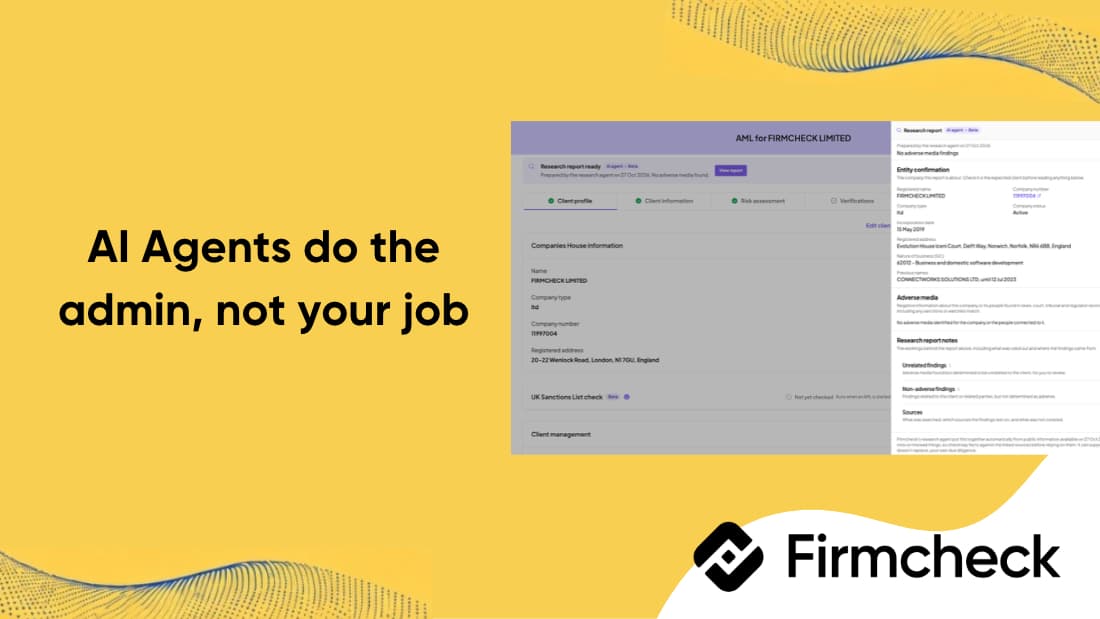
AI agents are helping accounting firms tackle repetitive admin, connect information across systems and streamline client onboarding. Explore practical use cases, the importance of human oversight and four steps to get started.
AI in accounting is moving beyond drafting emails and summarising documents. AI agents are beginning to take on repetitive administrative tasks across the systems firms already use, helping teams spend less time moving information around and more time on work that requires their expertise.
But where should firms start, and what needs to be in place before they let AI do more?
At a recent Firmcheck webinar, AI Agents Do the Admin, Not Your Job, a panel of industry experts explored how firms can put AI to work today, with live demonstrations of how a single instruction can trigger a series of tasks across different systems.
The message was practical: start with the admin, focus on real problems and keep people in control.
Traditional software generally requires people to navigate screens, move information between applications and complete each step themselves.
AI agents offer a different approach. Instead of performing every step manually, a user describes the outcome they want, and the agent works through the necessary tasks within the permissions it has been given.
During the webinar, Firmcheck's Chief Revenue Officer, Kevin Lord, demonstrated how an AI assistant could take a client meeting transcript and turn it into a prospect record. The process included checking Companies House, identifying directors, capturing contact details and services discussed, and assigning the relevant partner.
Another demonstration showed how an assistant could compare a practice management client list with an AML platform, create missing client records and related parties, and identify outstanding identity checks.
These examples illustrate the potential of connected AI: reducing the repetitive work involved in keeping systems and records up to date.
The webinar highlighted several practical applications that firms could explore.
Client onboarding and AML administration
Researching a prospective client, gathering company information and ensuring due diligence records are complete can involve considerable manual effort. AI can help bring information together, prepare records and identify outstanding checks for review.
Firmcheck is developing this approach through its AI AML Research Agent, currently in beta. From within an AML check for a company registered at Companies House, the agent searches public sources and compiles a report covering company details, adverse media relating to the company and connected people, director disqualifications, and judgments and charges. Findings are linked to their sources, and the report records the research undertaken, including where no adverse media is identified.
The agent sits alongside an automatic UK Sanctions List check. It is intended to support the firm's due diligence process and professional judgement, rather than replace them.
Meeting preparation and follow-up
AI can help turn meeting transcripts into notes, update client records and identify actions. Before a meeting, an assistant could also gather relevant information from accounting software, practice management, AML records and recent client communications.
Keeping systems in sync
Firms often maintain related information across several applications. AI agents can help identify missing records, update information and flag incomplete tasks, reducing the need to switch between systems and repeat administrative work.
Managing capacity and routine communication
Other examples discussed included using calendar and practice management information to support capacity planning, drafting requests for missing client information and identifying work that needs attention.
Individually, these tasks may save only a few minutes. Across a large client base, those savings can accumulate into meaningful capacity.
Giving an AI agent a task doesn't mean handing over responsibility for the outcome.
As the webinar panel highlighted, AI can produce convincing results that are nevertheless wrong. Firms need to understand what good work looks like so they can recognise errors and challenge outputs when necessary.
Before introducing an agent, consider three things:
- Access: What client information and systems can it access, and are those permissions appropriate?
- Approval: Which actions can it complete independently, and which require a person to review or authorise them?
- Evidence: Can the firm see what the agent did, what information it used and what still needs checking?
These questions are particularly important for AML and client onboarding, where an automated research report should not be confused with a completed compliance decision.
The panel also highlighted the importance of understanding which AI tools employees are already using, establishing clear policies and documenting processes. Connecting multiple systems can create efficiencies, but it also makes access controls and governance more important.
Firms don't need to automate their entire practice to begin benefiting from AI. The webinar suggested a straightforward four-step approach.
1. Audit. Understand which tools people use, where time is spent and which tasks involve repetitive administration.
2. Prioritise. Choose a task that takes considerable time but carries relatively low risk. Start with a manageable use case rather than trying to redesign everything at once.
3. Build. Set up the process, define permissions and establish where human review is needed.
4. Embed. Test the results, learn from mistakes and help the team build confidence before expanding into other workflows.
Writing down existing processes is an important part of this work. If a process is unclear or relies on knowledge held by one person, automating it may simply reproduce the underlying problems at greater speed.
Firms should also measure the results. Time saved matters, but so do accuracy, consistency, turnaround times and the quality of the service delivered to clients.
The opportunity for accounting firms isn't simply to complete administrative work faster. It's to reduce unnecessary effort, improve the flow of information and create more space for client relationships, advice and decisions that require professional expertise.
That means approaching AI with both ambition and discipline: identify the right tasks, establish the right controls and expand when the results justify it.
As AI agents become more capable of working across connected applications, the question for firms is no longer just which tool to try. It's which processes are ready to improve, and how to make those improvements safely and effectively.
Watch: AI Agents Do the Admin, Not Your Job — Firmcheck's on-demand webinar
Explore practical demonstrations and perspectives from Firmcheck, AI Accountancy, Sodium and Connector Central on how accounting firms can use AI agents, connect their systems and approach adoption responsibly.
Latest news, events, and updates on all things App related, plus useful advice on App advisory - so you know you are ahead of the game.
